
PFAS in Toilet Paper: Cancer Risks and 6 Brands to Watch
 Isabella Rose- I am a wellness and beauty writer exploring the science of skin longevity for women 35+.
Many individuals would never suspect that a common bathroom essential could spark concerns over harmful substances, but the presence of PFAS in toilet paper has indeed prompted such discussions for valid reasons. Scientific investigations have revealed that certain toilet paper items include fluorin
Many individuals would never suspect that a common bathroom essential could spark concerns over harmful substances, but the presence of PFAS in toilet paper has indeed prompted such discussions for valid reasons. Scientific investigations have revealed that certain toilet paper items include fluorinated chemicals capable of transferring into wastewater following usage. This discovery does not immediately classify every roll as a significant cancer hazard for personal health. Nevertheless, it positions a routine household product within a broader issue of contamination that troubles scientists, regulatory bodies, and public health professionals alike.
Certain PFAS variants have established connections to cancer and various other grave health issues, even as experts continue to examine the complete implications of ongoing low-level contact through everyday goods. Existing data more prominently identifies food and drinking water as primary pathways for exposure, yet toilet paper holds relevance due to its frequent application and direct discharge into sewage networks. This frequent usage and disposal pattern lends substantial importance to the matter. Thus, consumers require more than sensational headlines; they benefit from a detailed examination of the research findings, the potential risks associated with toilet paper during personal use, its role in post-flush contamination, and the specific product varieties warranting heightened vigilance.
Toilet Paper Joins the PFAS Conversation
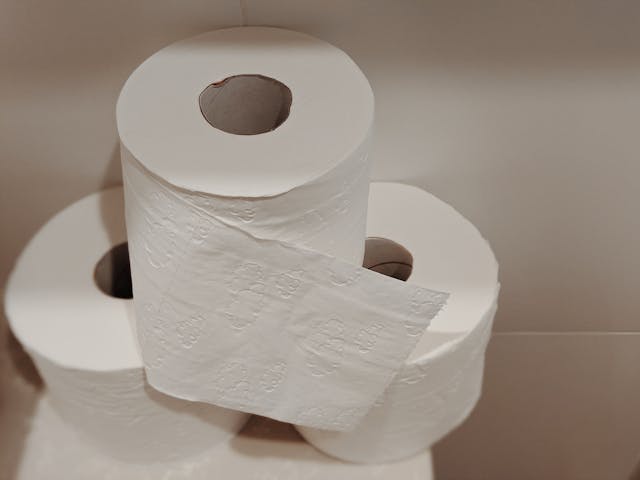
Scientific inquiry brought toilet paper into the spotlight of PFAS discussions after experts identified fluorinated substances in tissue specimens and connected them to pollution in wastewater. Image Credit: Pexels
The contemporary discourse on this topic originated not from consumer shopping lists or widespread social media alerts, but from rigorous analysis of wastewater. Researchers Jake Thompson, Boting Chen, John Bowden, and Timothy Townsend examined toilet paper available commercially across North America, South and Central America, Africa, and Western Europe. They subsequently cross-referenced their findings with data from sewage sludge. Their results carried significant impact. The team pinpointed toilet paper as a possible primary contributor to PFAS infiltration into wastewater infrastructure. This revelation captured widespread notice by implicating a commonplace paper item in a contamination challenge typically associated with drinking water supplies, industrial discharges, and food packaging materials. The study detected multiple PFAS types, with 6:2 diPAP emerging as the predominant compound in the tissue samples. Furthermore, they calculated that toilet paper might represent approximately 4% of the 6:2 diPAP levels recorded in sewage throughout the United States and Canada.
In Sweden, their estimates reached around 35%, and in France, they climbed as high as 89%. These figures do not position toilet paper as the universal top PFAS contributor globally. However, they demonstrate that discarded tissue can substantially influence contamination levels, particularly in regions where alternative sources prove less prominent. This insight profoundly altered the narrative. What was once viewed as an unremarkable paper commodity now appears as an integral component of extensive chemical dissemination pathways. Experts and external analysts have proposed reasonable mechanisms for how these substances infiltrate the paper. PFAS could be introduced during the pulping stage, via additives employed in paper production, or through pre-existing pollutants in recycled fiber supplies. Consequently, the problem likely stems from carryover effects within supply chains rather than deliberate inclusion. For everyday buyers, this shifts the focus from manufacturer intent to unavoidable outcomes.
A single roll requires no purposeful PFAS composition to introduce these chemicals into sewer systems upon flushing. The research also delineated its limitations transparently, which adds credibility. The authors refrained from releasing a roster of specific retail brands from their international samples. Media coverage of the study confirmed that brand identities remained undisclosed. The core assertion stayed focused yet vital: PFAS exist in toilet paper, and upon usage and flushing, these substances migrate into wastewater conduits. Subsequent articles on the research highlighted that diPAPs, rather than solely the most notorious legacy PFAS, prevailed as the key compounds. Additional insights from extended reporting on the study proved enlightening.
The team contrasted recycled versus non-recycled options and observed no substantial variance in diPAP levels attributable solely to recycling status. They likewise did not comprehensively evaluate all fiber alternatives equally. Thus, options like bamboo, recycled pulp, or virgin fibers cannot be definitively ordered based on this work alone. The most reliable interpretation of the data maintains balance: toilet paper does not encapsulate the entirety of the PFAS challenge, but it undeniably participates in it. The pathway through wastewater underscores the finding's gravity. This perspective guides both consumers and policymakers effectively. Consequently, the conversation has expanded from mere product safety to encompass source management, constraints of wastewater processing, and the concealed chemical profiles of routine paper consumables.
Understanding the Likely Exposure Risks
The term cancer-associated PFAS demands precise application, given that PFAS encompass a vast array of chemicals rather than one uniform entity. The most robust cancer designations currently apply to particular members, notably PFOA and PFOS. In 2023, the International Agency for Research on Cancer deemed PFOA carcinogenic to humans and PFOS possibly carcinogenic. The American Cancer Society elaborates that evidence linking PFOA to humans includes constrained data on kidney and testicular cancers, while links to additional cancers remain inconclusive. These evaluations clarify the toilet paper research's public resonance. Associating a standard bathroom necessity with a chemical group featuring Group 1 and Group 2B carcinogens naturally heightens apprehension.
However, the toilet paper investigation did not indicate that users absorb a confirmed carcinogenic quantity through routine wiping. Its primary focus concerned environmental introduction. The chief substances identified were mostly fluorinated precursors, with 6:2 diPAP at the forefront. Apprehension partly arises from the transformations these compounds undergo post-release and their enduring environmental presence. This differentiation proves crucial. While hazards exist, the actual danger hinges on exposure pathways, dosage levels, and repetition rates. The Environmental Protection Agency emphasizes that numerous PFAS degrade extremely slowly, accumulating in humans, wildlife, and ecosystems over extended periods. This durability explains the rising scrutiny on minor sources. An isolated contributor might seem negligible, but cumulative emissions from countless products can amplify widespread pollution.
Toilet paper exemplifies this dynamic. Its daily deployment, swift disposal, and exclusion from typical chemical risk dialogues amplify its profile. Contextual analysis refines risk perception and ensures accurate reporting. Health authorities currently describe limited direct exposure from toilet paper handling. The Agency for Toxic Substances and Disease Registry asserts that dermal uptake of PFAS remains minimal, deeming it an insignificant pathway for the broader population. The American Academy of Pediatrics echoes this prioritization, identifying ingestion via food and water as the predominant route. These positions do not render toilet paper contact inconsequential.
The material contacts delicate skin areas with habitual frequency across lifetimes. Nonetheless, prevailing guidance does not rank toilet paper among leading exposure sources. That distinction falls to tainted water, foodstuffs, household dust, and select work environments. A comprehensive assessment yields dual insights. Primarily, PFAS in toilet paper merits attention, as no superfluous exposure merits tolerance. Secondarily, evidence suggests the paramount public health challenge lies in downstream wastewater, sludge accumulation, and ecological cycling. Direct skin contact during brief bathroom routines does not constitute a major dosage vector. Shoppers ought to address the topic earnestly without equating a feasible pathway with the dominant one burdening most individuals' systems.
Chemicals from Flushing Reenter via Water and Soil Cycles
The most compelling rationale for worry activates post-usage, upon flushing. Toilet paper then joins wastewater flows already laden with PFAS from residential activities, industrial outputs, personal care items, fabrics, and food wrappers. This blend proceeds to treatment facilities ill-equipped to fully neutralize contemporary fluorinated compounds. The 2023 toilet paper analysis projected that individual toilet paper consumption could introduce notable quantities of 6:2 diPAP into sewage annually. Standing alone, this projection does not foretell sharp escalations in personal exposure. It does illustrate how a commonplace, short-lived item perpetuates enduring pollution circuits. The EPA's 2025 sewage sludge overview elucidates the wider implications. It indicated potential human health risks surpassing agency thresholds in certain simulated scenarios for PFOA and PFOS.
This preliminary evaluation targets neither general populations nor singles out toilet paper as the sole culprit. Nonetheless, it reflects regulators' intensified focus on PFAS within biosolids, land applications, and disposal routes. Transitioning from bathroom to sludge reframes the inquiry from domestic scale to implications for agriculture, aquifers, earth, and perpetual recycling. This expansive scope proves pivotal. Wastewater operations expose realities often omitted from packaging. Historical paper pollution narratives regain pertinence here. The EPA has cautioned that recycling thermal receipts can propagate bisphenol A into subsequent paper goods, encompassing toilet paper. A 2011 PubMed-listed study detected BPA across diverse paper types, including toilet tissue.
EPA documentation posits that BPA in recycled toilet paper could serve as an supplementary environmental release mechanism. This counters assumptions that recycled equates to purer. Environmentally, recycled fibers frequently deliver genuine sustainability gains, warranting recognition. Regarding pollutants, however, reclaimed paper may transport residual contaminants from prior applications, particularly amid lax supply oversight. This principle elucidates PFAS persistence sans intentional addition. Impurities accompany raw materials, production assistants, or pre-retail packaging contacts. The fundamental concern transcends factory designs.
It centers on what endures the supply progression and infiltrates waterways post-consumption. Accordingly, wastewater dimensions merit precedence over bathroom sensationalism. The World Health Organization's dioxin overview provides an apt analogy. It highlights that chlorine pulp bleaching can yield lasting byproducts. It further stresses that most human dioxin encounters occur via diet following ecological dissemination. Though PFAS chemistry diverges, the recirculation motif persists. Manufacturing-initiated issues traverse waste conduits, reemerging via water, terrain, produce, livestock, and ultimately human intake. This loop elevates toilet paper beyond hygiene, as momentary use sustains enduring contamination through aquatic, terrestrial, farming, and dietary channels.
Six Brands and Product Categories Warranting Heightened Scrutiny
Independent consumer assessments spotlighted notable and eco-promoted toilet papers, underscoring that ambiguous origins and supplementary ingredients invite wariness. Image Credit: Pexels
The academic study igniting this discourse omitted specific retailer names. Subsequently highlighted products stemmed from distinct consumer evaluations covered by Environmental Health News and Mamavation. In this constrained evaluation, 17 toilet paper varieties underwent total fluorine analysis at an EPA-accredited facility. Total fluorine signals potential PFAS presence, though it differs from exhaustive compound-specific assays. Environmental Health News presented outcomes with a key qualification: levels suggested unintentional incorporation. Nonetheless, four items registered detectable fluorine, between 10 and 35 parts per million.
These included Charmin Ultra Soft Toilet Paper, Seventh Generation 100% Recycled Bath Tissue, Tushy Bamboo Toilet Paper, and Who Gives a Crap Bamboo Toilet Paper. Such outcomes do not confirm uniform PFAS across all production runs or lines from these makers. They do signify appearance in targeted independent scrutiny, meriting vigilance pending widespread verification. Who Gives a Crap reports occasional trace organic fluorine in routine checks. Seventh Generation acknowledges possible recycling-derived contaminants in its tissue. These admissions neither resolve nor refute concerns. They affirm contamination as tangible rather than speculative. Consumers should interpret findings judiciously, neither overreacting nor ignoring.
View brand mentions as navigational advisories rather than definitive condemnations. Charmin features due to fluorine detection queries. Seventh Generation due to recycling's contamination propagation potential. Tushy and Who Gives a Crap because bamboo sourcing alone insufficiently assures chemical purity. Fiber selection aids, yet corroborated assays provide superior assurance. Two expansive categories further invite caution absent brand-specific callouts. Primarily, scented or lotion-infused toilet papers. Secondarily, those with opaque supply details on recycled pollutant management, fluorine checks, or processing formulations. Green Seal's 2025 sanitary paper criteria illuminate these vulnerabilities. It bans fragrances in endorsed products. It mandates absence of PFAS in papermaking functionals or their contaminants.
Recycled variants necessitate processed chlorine-free compliance. Bamboo and residue-based require total or elemental chlorine-free methods. These stipulations neither deem all non-certified items hazardous. They delineate advancing safety paradigms. Chlorine usage introduces subtleties. WHO identifies dioxins as bleaching byproducts. Contemporary toilet paper dermal exposures remain less defined than occupational ones. Thus, optimal guidance simplifies: favor unscented, transparent, chlorine-free, or minimally processed options as preferable. Approach imprecise assertions, sourcing opacity, and additive-laden variants with skepticism.
Strategies for Smarter Purchasing Amid Evolving Research
Buyers lack facilities for home lab scrutiny, so prioritize minimizing needless ambiguities. Opt for unadorned variants with few extras. Unscented tissue sans lotions or perfumes outperforms opulent, additive-heavy selections. Seek firms detailing fiber provenances. Prioritize those revealing recycled or alternative fiber employment. Favor those affirming fluorinated chemical or organic fluorine monitoring. Emerging certifications supply actionable cues. Green Seal's updated sanitary paper protocol prohibits PFAS in additives or contaminants thereof. It enforces chlorine and scent restrictions. Uncertified does not equate unsafe.
It signals accessible superior metrics for guidance. Brands evading queries on PFAS stances, fiber origins, bleaching protocols, or scent compositions convey reticence. Imperfection proves unnecessary; transparency suffices. Enhanced public criteria would streamline assessments. Prudent selection emphasizes uncertainty reduction over hype pursuit. Disclosed basic rolls outshine ambiguously eco-phrased premiums. This disparity endures. Overlooked amid lacking spectacle: toilet paper merits PFAS consideration sans monopolizing it. Nor does it dominate exposure narratives for typical homes.
The American Academy of Pediatrics identifies dietary and aqueous ingestion as chief PFAS encounters. ATSDR limits dermal uptake significance population-wide. Evidence relegates toilet paper to auxiliary direct exposure status, despite wastewater import. Respond with measured, actionable prudence. Select straightforward papers preferentially. Endorse disclosing brands. View recycled assertions provisionally pending assays. Advocate manufacturing chemistry reforms. Upstream remediation outperforms domestic detection. PFAS minimization prioritizes holistic strategies.
Monitor water quality disclosures, deploy filtration amid taint, scrutinize food interfaces—these eclipse isolated paper switches. This panorama aligns scientifically, preventing token changes from eclipsing substantive gains. Dismissal of toilet paper proves unwise. Daily deployment across millions accelerates sewage accumulation. Refined formulations, processes, assays, and labeling yield superior safeguards versus packaging platitudes. Pending robust protections, vigilance, openness, and simplicity fortify consumer defenses.
Weekly Digest
Top articles delivered to your inbox every week.